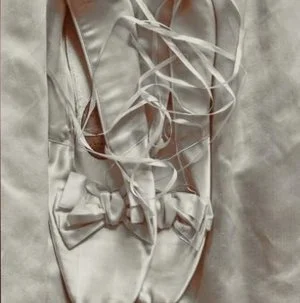
Berenice Abbott left the American Midwest in 1918 to study in New York City, Paris, and Berlin. In Paris she became an assistant to Man Ray and Eugène Atget. In 1925 she set up her own studio and made portraits of Parisian artists, writers, collectors and expatriates. She retrieved and catalogued Atget's prints and negatives after his death. In the 1930s she photographed New York's neighborhoods for the WPA Federal Art Project, documenting its changing architecture; many of the photographs were published in Changing New York (1939).
Read MoreIn a career spanning more than seven decades, Ruth Bernhard has created an imposing body of work. Distinguished by their exquisite use of light, her images have been internationally recognized and acclaimed by her peers. Radiant still-life studies and nude forms reflect her passionate search for the universal connection of all things. Said by Ansel Adams to be the finest photographer of the nude, Bernhard is associated with the history of Northern California's wealth of eminent photographers, among them Adams, Edward Weston, Imogen Cunningham, and Dorothea Lange. Bernhard's work has been exhibited and included in the permanent collections of major museums and universities in the United States, Europe, Japan, and Mexico, and has been published worldwide.
Read MorePatty Carroll has been known for her use of highly intense, saturated color photographs since the 1970’s. Her most recent project, “Anonymous Women,” consists of a 3-part series of studio installations made for the camera, addressing women and their complicated relationships with domesticity. By camouflaging the figure in drapery and/or domestic objects, Carroll creates a dark and humorous game of hide-and-seek between her viewers and the Anonymous Woman. The photographs are published as a monograph, Anonymous Women, officially released in January, 2017 by Daylight Books.
Read MoreImogen Cunningham occupies a singular position in the history of American art of the twentieth century. For over half the history of photography, she explored- with innovation and a new perspective- all the major traditions associated with the medium as fine art. She has been most widely acclaimed for the photographs made during the 1920s and 1930s, particularly close-up images of plants and nudes. She also made portraits which are now considered classics in photography, including images of Alfred Stieglitz, Spencer Tracy, and Martha Graham. She was a founding member of the West Coast-based Group f.64, which championed an un-manipulated, direct approach with the camera, or “straight” photography. Her photographs are represented in major collections and museums around the world. The Weston Gallery represents the Imogen Cunningham Trust and have vintage, modern as well as posthumous prints available.
Read MoreIra Elliot Kahn was born in San Francisco and introduced to photography as a seven year old boy while living in Cambodia. In 1965 Kahn began to develop his craft, doing beautiful work in the darkroom where his passion for fine prints was born as he learned how to make them. His work was first exhibited in 1967. Kahn studied studio art and film making at Stanford University, receiving his degree with distinction in 1972. Today, his work can be found in distinguished public and private collections.
Intimacy and form are the cornerstones of Kahn's work. Delight in seeing inspires it; abstraction and craftsmanship realize it. So much of our world is given to imitation. In contrast, Kahn works with conditions and subjects that reflect a genuine nature of their own. He renders them in a way that builds upon essential but often hidden and obscure characteristics. Kahn's photographs are true to their subjects though always interpretive and rarely representational. "The union of mystery and vitality in the art of so many ancient and tribal cultures is a fundamental influence in my work." Like ceremonial masks that reveal more than they conceal, Kahn's photographs are conduits through which otherwise unknown qualities are expressed.
Read MoreTina Modotti’s photographs blend formal rigor with social awareness. The Italian-born artist immigrated to the United States when she was 16. She acted in plays and silent films, and worked as an artist’s model during her first years in the country. In 1920 she met photographer Edward Weston, who mentored her and was a great influence on her subsequent work. By 1921 they had become lovers, and in 1923 they moved together to Mexico City, which had become a cosmopolitan center in the interwar years. There, cultural and political expatriates like Weston and Modotti, Sergei Eisenstein, and Leon Trotsky moved in bohemian circles with Mexican intellectuals and artists such as Frida Kahlo and Diego Rivera. Modotti and Weston opened a portrait studio in the city.
Read MoreDiane Rosenblum’s heavily blurred and color infused photographs of plants and flowers range from nearly representational to almost entirely abstract. Made with experimental camera techniques, these images reach towards the numinous. They are a hazy dream memory or a future vision of a world of light and color. They explore a state of being like that induced through meditation, giving the sensation of being in a garden or remembering a garden. These lush photographs function to calm the mind and instill quiet sense of tranquility and elation.
Read MoreCara Weston was born and raised in Carmel, California, the daughter of photographer Cole Weston and Helen Prosser Weston and granddaughter to the world-renowned photographer Edward Weston and Flora Chandler Weston. Living in the photographic world all her life, in the 1970s, she worked for and with her father Cole Weston, and with her uncle, Brett Weston as an assistant and model. She also spent a short time assisting black and white photographer Rod Dresser. Cara initially photographed using only black and white film, she has broken with family tradition and has embraced digital photography. She also worked in the medium of stained glass for many years. Cara inherited another Weston family passion, sailing, which she did extensively, making trips to Hawaii, Costa Rica, the Channel Islands and Baja, Mexico. Cara's most personal and rewarding years have been raising her two daughters and being a mother. She strongly feels this is her greatest accomplishment in life and can't imagine anything else ever being as rewarding. Cara currently lives in Big Sur, California.
Read MoreMargaret Bourke-White was born in New York City and attended the Clarence H. White School of Photography in 1921-22. After graduating from college in 1927, she pursued a career in photography and opened a photography studio in Cleveland. The industrial photography she did there brought her work to the attention of Henry Luce, the publisher of Fortune, who hired her in 1929, and the next year sent her to the Soviet Union, where she was the first foreign photographer to make pictures of Soviet industry. She photographed the Dust Bowl for Fortune in 1934; this project led to the publication of You Have Seen Their Faces (1937), which documented the human aspects of the Depression and featured text by Erskine Caldwell. In the fall of 1936, Henry Luce again offered Bourke-White a job, this time as a staff photographer for his newly conceived Life magazine. Bourke-White was one of the first four photographers hired, and her photograph Fort Peck Dam was reproduced on the first cover.Over the next several years and throughout World War II, Bourke-White produced a number of photo essays on the turmoil in Europe. She was the only Western photographer to witness the German invasion of Moscow in 1941, she was the first woman to accompany Air Corps crews on bombing missions in 1942, and she traveled with Patton's army through Germany in 1945 as it liberated several concentration camps. During the next twelve years, she photographed major international events and stories, including Gandhi's fight for Indian independence, the unrest in South Africa, and the Korean War. Bourke-White contracted Parkinson's disease in 1953 and made her last photo essay for Life, "Megalopolis," in 1957.
Read More